The 1970s were one of Omega’s most experimental and creative decades, and a 1970 Omega watch remains a favorite among vintage watch collectors today. This was the era that gave us the massive dive-ready Seamaster Ploprof, the record-breaking Speedmaster Professional 125, and a wave of bold, colorful dress watches under the De Ville and Genève names. Whether you already own one, inherited one, or are searching for your first vintage Omega.
This guide covers the history, key models, pricing, and what to check before you buy.
Why the 1970s Were a Golden Era for Omega
The watch industry in the 1970s was in the middle of major change. Automatic chronograph movements were new and exciting, colorful dials and bold case shapes were pushing past the conservative designs of previous decades, and Omega was right in the middle of that experimentation. It was a period defined by:
- The rise of automatic chronograph movements, a genuine technical breakthrough at the time
- Bold, unconventional case shapes — square, cushion, and oversized “TV screen” cases became common
- The introduction of electronic and early quartz movements alongside traditional mechanical calibers
- Strong ties to professional use, from diving to space exploration
This mix of technical innovation and design experimentation is exactly why 1970 Omega watches remain so collectible more than fifty years later.
Notable 1970 Omega Watch Models
Omega Seamaster 600 Ploprof (Ref. 166.077)
Introduced in 1970, the Ploprof — short for the French “plongeurs professionnels” (professional divers) — was built as a serious tool watch. Its massive 54mm x 45mm case and unusual, asymmetrical shape make it one of the most distinctive Omega designs ever released, and it remains one of the most sought-after references from this exact year.
Omega Speedmaster Professional 125
Created to mark Omega’s 125th anniversary, this reference is considered one of the standout Speedmaster models of the decade. It combined the Speedmaster’s chronograph heritage with a larger, more technically advanced case, and remains a favorite among Speedmaster collectors specifically searching for 1970s references.
Omega Seamaster (Ref. 166.067 and Similar)
Standard Seamaster references from 1970 offered automatic movements, clean dial layouts, and the everyday versatility that made the Seamaster line one of Omega’s best-selling collections throughout the decade.
Omega De Ville
The De Ville line leaned into dressier, more refined case shapes during this period, often featuring manual-wind movements, two-tone gold and steel finishes, and slimmer profiles aimed at formal wear.
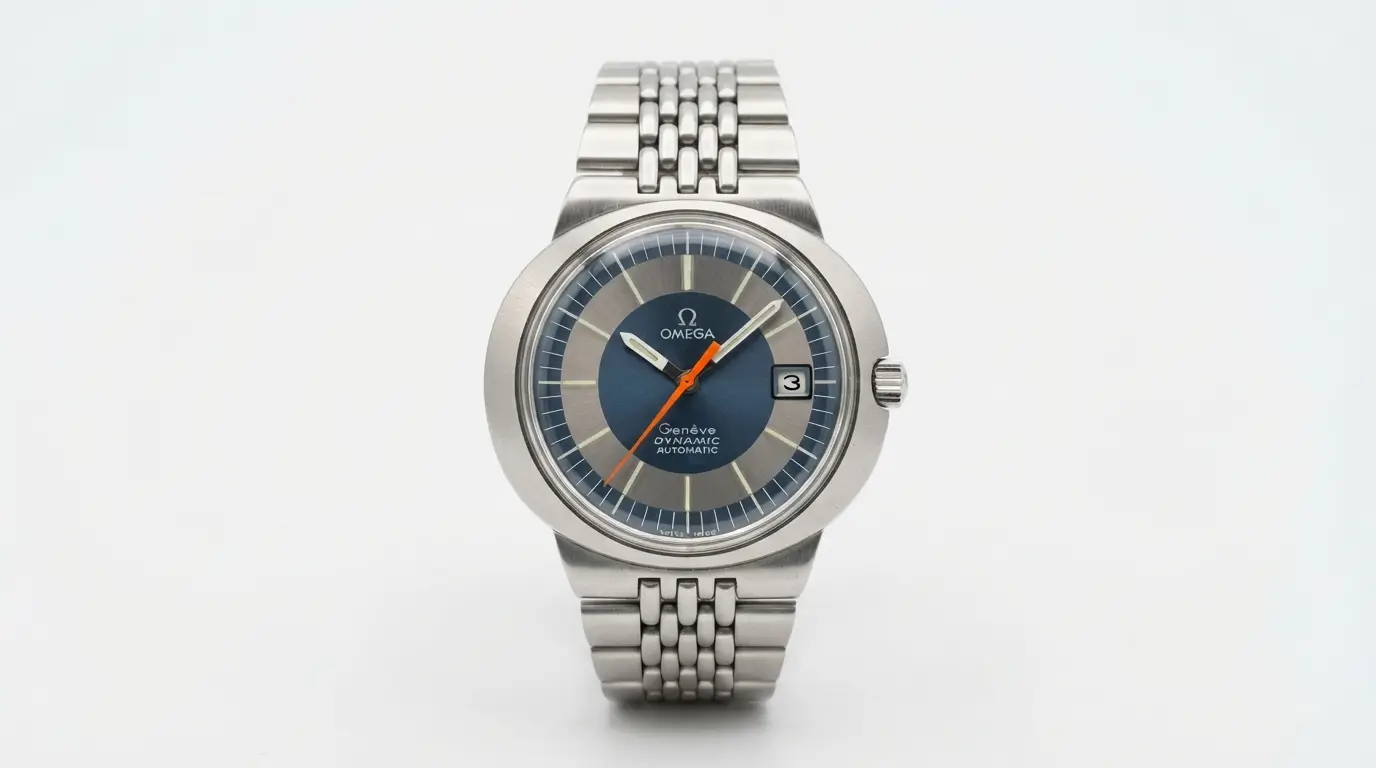
Omega Genève
Marketed as a more accessible entry point into Omega ownership, the Genève collection from this era included everything from classic round cases to bold “TV-shaped” and barrel cases, with both mechanical and early electronic movements.
How to Identify and Date a 1970 Omega Watch
If you’re trying to confirm whether a watch you own or are considering buying is genuinely from 1970, a few details help narrow it down:
- Case reference number — usually stamped on the case back, and can be cross-referenced against Omega archive databases
- Movement caliber — calibers from the 5xx, 6xx, and 10xx families were common in this era; the specific caliber can help confirm production timing
- Serial number — engraved inside the case back or on the movement itself, and can be checked against known Omega serial number production ranges
- Dial and hand style — design details like hour markers, hand shapes, and any “Automatic” or “Chronometer” text can help date a piece within a few years
For a precise date, an Omega Extract from the Archives (available directly from Omega) is the most reliable way to confirm a specific watch’s original production details.
1970 Omega Watch Price Guide
Pricing for vintage 1970 Omega watches varies significantly depending on the model, condition, originality, and documentation.
| Model Type | Approx. Price Range (USD) |
| Entry-level Genève / De Ville (steel) | $500 – $1,500 |
| Standard Seamaster (steel, automatic) | $1,500 – $3,500 |
| Solid gold De Ville / dress models | $2,000 – $5,000+ |
| Seamaster 300 references | $7,000 – $10,000+ |
| Speedmaster Professional 125 | $5,000 – $10,000+ |
| Seamaster 600 Ploprof | $8,000 – $15,000+ |
Prices can shift significantly based on originality (unrestored, original dial and hands), overall condition, and whether the watch comes with box, papers, or service history.
Tips for Buying a 1970 Omega Watch
- Prioritize originality. A watch with its original dial, hands, and case tends to hold more value than one with replaced parts, even if it looks “cleaner.”
- Ask about service history. A recently serviced movement is a meaningful selling point for a 50+ year old watch and can save you a costly repair later.
- Buy from a specialist when possible. Dealers who focus specifically on vintage watches are generally better equipped to verify authenticity than general marketplaces.
- Request an Extract from the Archives if uncertain. This Omega-issued document confirms a watch’s original specifications and production date.
- Inspect the case carefully. Over-polishing can soften original case edges and reduce both value and historical accuracy.
Is a 1970 Omega Watch a Good Investment?
Vintage Omega watches from the 1970s occupy an interesting position in the market: distinctive enough to stand out from more conservative earlier decades, but still more accessible than comparable vintage Rolex pieces from the same era. References with strong stories — like the Ploprof or Speedmaster Professional 125 — have shown consistent collector interest over time, while more common Genève and De Ville models remain an affordable way to own genuine vintage Swiss watchmaking.
FAQs
What is special about Omega watches from 1970?
1970 sits right at the start of one of Omega’s most experimental design decades, producing standout references like the Seamaster 600 Ploprof and bold, colorful De Ville and Genève dress watches.
How can I tell what year my Omega watch was made?
Check the case reference number and serial number, and compare them against Omega’s known production ranges. For a definitive answer, you can request an Extract from the Archives directly from Omega.
How much is a 1970 Omega Seamaster worth?
A standard steel Seamaster from 1970 typically ranges from around $1,500 to $3,500, while rarer references like the Seamaster 300 or Ploprof can command significantly more.
Are 1970 Omega watches a good investment?
Certain references, particularly the Ploprof and Speedmaster Professional 125, have shown strong and consistent collector demand. More common models are better suited to buyers who want an affordable, genuine vintage piece rather than a pure investment.
Where can I buy an authentic 1970 Omega watch?
Reputable vintage watch specialists, established auction houses, and dealers who offer authenticity guarantees are generally the safest sources, especially compared to unverified general marketplace listings.
Conclusion
A 1970 Omega watch offers a genuine piece of watchmaking history from one of the industry’s most creative decades whether that’s the tool-watch toughness of the Ploprof, the record-setting Speedmaster Professional 125, or the everyday elegance of a De Ville or Genève. Understanding the key models, how to verify a watch’s age, and what affects its value puts you in a strong position whether you’re buying your first vintage Omega or adding to an existing collection.